Wanting to collaborate better, gain control over an overloaded annual plan, increase job satisfaction and, in turn, reduce staff turnover: these are challenges almost every organization in every sector faces. But the cultural sector is not the same as the business world. It has its own unique challenges, working methods, and goals. That’s why Curious Culture, together with Scrum Facilitators, developed a two-day Professional Scrum Master training specifically tailored to the cultural sector. We spoke with Ziryan Salayi, owner of Scrum Facilitators, about what Scrum is and why it can be so effective for organizations in the cultural field.
Scrum as a way of working has been around since the 1990s, but there is still confusion about what it actually is. Is it a step-by-step plan you follow to reach a certain goal? A handy set of instructions you hand over to your team? According to Ziryan Salayi, co-founder of Scrum Facilitators, the concept is often misunderstood. “Many organizations do indeed see Scrum as a method or step-by-step plan, but in fact it’s a framework. And that’s not just semantics. A framework provides structure and values within which teams can find their own best way of working. Especially in a complex environment such as a cultural organization, this is incredibly valuable. You often don’t know exactly what the outcome will be, but by working towards it in short iterations and learning continuously, you create value along the way rather than postponing it.”
“Ultimately, it is about job satisfaction, ownership and autonomy”
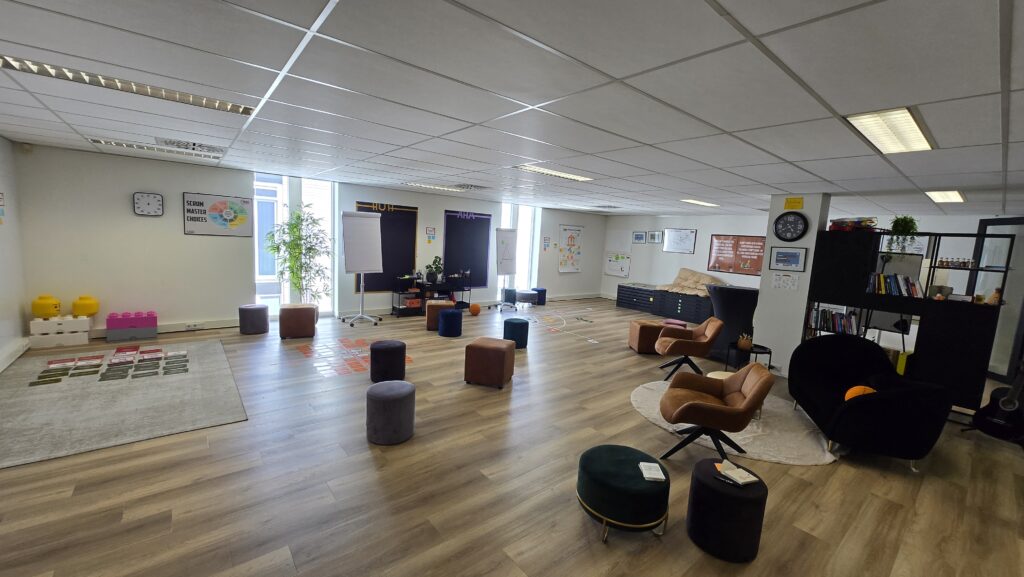
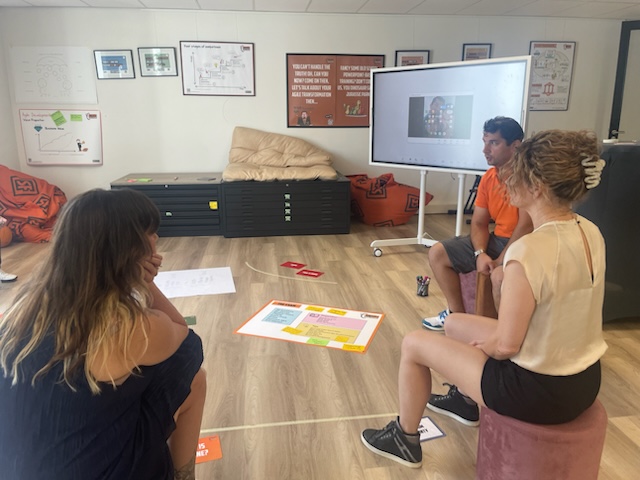
If it’s not a method, then how do you learn it? “There’s a reason we call ourselves Scrum Facilitators and not Scrum Trainers,” Ziryan explains. “Of course, you can read the theory online or in a book. But what matters to us is that you actually experience it and understand the principles behind the framework. Our trainings are interactive, with mini-workshops and serious games. We work without tables, using walls and floors to encourage maximum interaction. That way you learn by doing, and you can immediately apply it to your own practice the very next day.”
One example of this learning-by-doing approach is working empirically, one of the key principles of Scrum. Ziryan illustrates it with an example from his own company: “When we started offering courses at our office, we needed a coffee machine so participants could grab a cup during breaks. I could have spent weeks researching exactly how many cups of coffee people drink per minute until I found the ‘perfect’ answer. Instead, after some quick research, I bought one machine that met the basic requirements and observed what happened. On the very first day, it was clear that the line during breaks was too long, so we ordered a second one. The quality was fine, so that solved the problem. That’s how empirical work functions: you take a step, observe, adapt. The goal remains the same -good coffee for everyone—but you learn along the way what’s really needed.”
So why a Scrum training designed specifically for cultural organisations? “Because the language and roles are completely different than in tech or business,” Ziryan explains. “In an IT environment, everyone knows what a product owner is. In a theater or museum, you have to translate that: who actually has the mandate to make decisions here? Only once that’s clear can you apply the framework.”
Linda Thoen from Tò Mò adds: “The difference lies in the core of the organisation. A private-sector company is primarily focused on profit. In the cultural sector, the artistic mission comes first, often within the constraints of subsidy structures. That requires a different way of applying Scrum. That’s why it’s so valuable to follow a training that’s tailored to the reality of cultural organisations.”
“When you’re too busy to do the training is precisely when it’s most effective”
Many organisations in the arts and culture sector struggle with high workload, driven by rapid production cycles, constantly changing demands, and limited resources. Scrum can provide real relief, says Ziryan. “Whether you’re an IT company or a museum, the framework itself doesn’t change, but the way you apply it does. In any case, it provides structure to work transparently, set goals, and continuously improve together. Ultimately, it’s about job satisfaction, ownership, and autonomy. People feel more valued and see results from their work sooner. That makes organisations not only more agile but also more enjoyable places to work.”
And who should join the training? “Preferably not someone who is just ‘sent by their boss,’” Ziryan laughs. “Scrum works best if you’re genuinely curious about it. Ideally, come as a leadership member together with a colleague who’s open to change. That way, you can translate it together into your organisation. You don’t have to overhaul everything overnight. Often it starts with just one practical tool, like a roadmap or a retrospective.”
According to Ziryan, the best moment to join a training is when you actually feel too busy: “The temptation is to wait until things calm down. But the truth is, the training is most effective when you’re in the middle of the chaos. That’s when you have real, concrete challenges you can address the very next day. Whether it’s too many projects at once, unclear goals, or siloed teams, Scrum helps you regain clarity and direction.”
The Professional Scrum Master training for the cultural sector, organised by Scrum Facilitators in collaboration with Curious Culture, took place on October 7 and 8, 2025.